
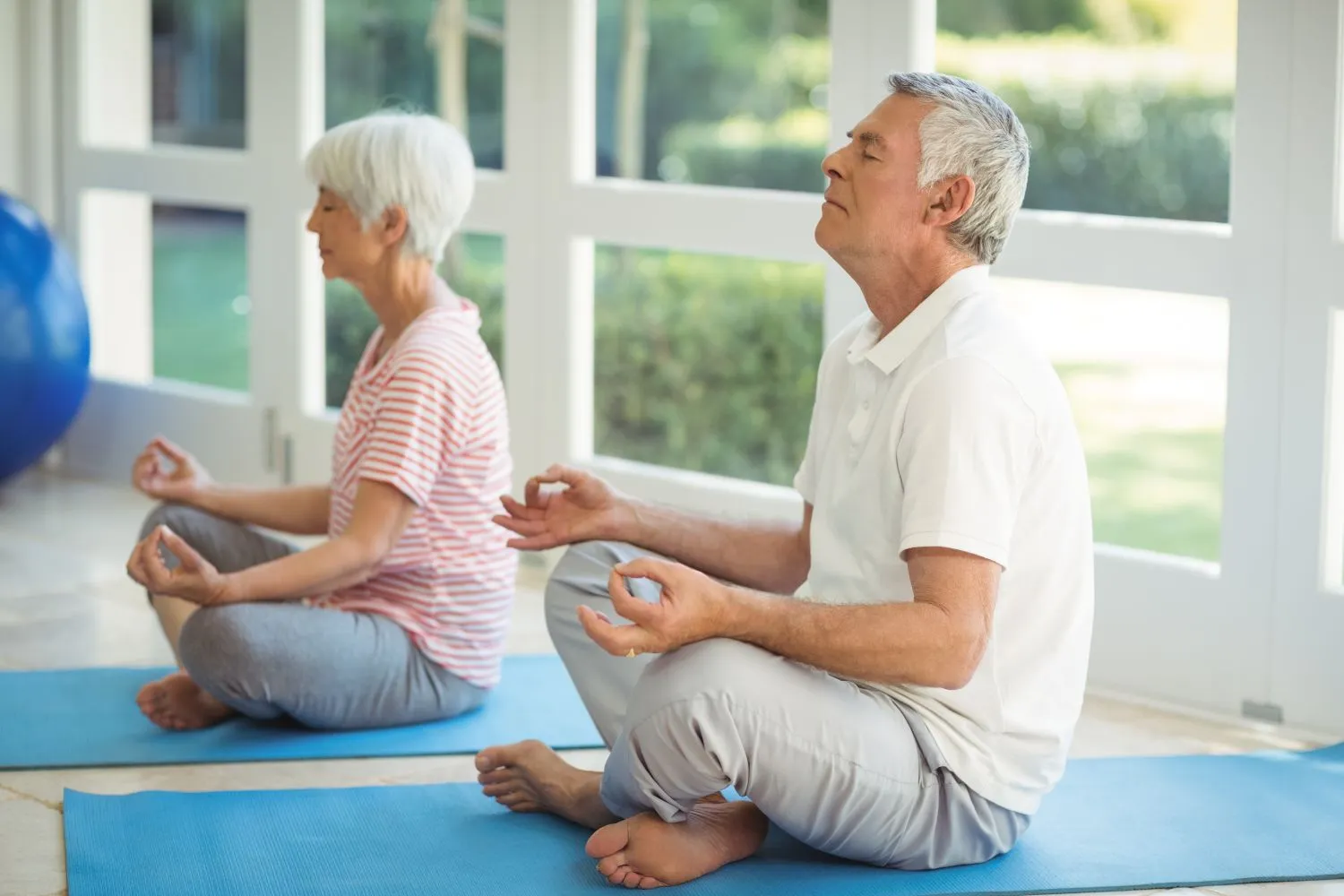
As seniors age, they require more attention to their overall well-being. Their stressed muscles require flexibility and balance as well. Therefore, yoga for seniors is one proven beneficial approach to prevent them from falling frequently. In addition, it also proves helpful for them in waking up without a nagging ache in the lower back.
Caregivers often ask, is yoga good for seniors, know that yes, it is a significant bridge to functional freedom. It is a practice that meets you, whether you are athletic and active or managing chronic conditions like arthritis or limited mobility.
In this guide, we will explore how yoga can transform the senior experience by enhancing flexibility, promoting deep relaxation, and fostering a sense of community and inner peace.
As we age, our bodies undergo several physiological changes. Connective tissues lose some of their water content, making joints feel creaky. Therefore, yoga exercises for seniors help manage the muscle mass that naturally declines (sarcopenia). Moreover, it also supports the nervous system’s ability to coordinate balance, which can slightly diminish.
Yoga exercises for seniors at home address these changes through three primary pillars:
This yoga for seniors technique involves gently stretching muscles and improving joint lubrication.
This yoga routine for seniors increases oxygen flow and calms the nervous system.
This gentle yoga for seniors aims to reduce the mental noise and anxiety often associated with health concerns or life transitions.
The following are a few benefits in terms of yoga for seniors:
Yoga balance exercises for seniors help improve the fall risk in seniors. This further benefits with a reduced number of injuries in seniors. Essentially, yoga strengthens the core and the small stabilizer muscles in the ankles and feet.
Yoga stretches for seniors help move the joints through their full range of motion. In addition, it also helps circulate synovial fluid, which acts as a natural lubricant.
The focus required in yoga for seniors acts as a brain gym, helping to keep the mind sharp and focused.
Beginners yoga for seniors helps lower cortisol levels and prepare the body for a restorative night’s rest.
Before rolling out yoga and seniors, it is essential to prioritize safety.
Yoga for seniors must be started once you have consulted your healthcare provider. This involves all about joint replacements, your condition of osteoporosis, or high blood pressure.
Not all yoga is the same. Yoga stretching for seniors requires you to look for Hatha, Restorative, Yin, or Chair Yoga classes. However, it is recommended that you avoid Hot Yoga or high-intensity Power Vinyasa for seniors unless you are already an experienced practitioner.
Yoga sequence for elderly comes with a difference between a good stretch and pain. If a movement feels sharp or pinching, back off immediately.
The following are a few prominently recommended yoga for seniors:
Chair yoga for seniors is perfect for those with balance issues or difficulty getting up and down from the floor. The chair provides a stable base while allowing the spine and limbs to move freely.
Restorative yoga for seniors uses props (bolsters, blankets, and blocks) to fully support the body. You hold poses for several minutes, allowing the nervous system to switch from fight or flight to rest and digest.
Yoga for seniors over 70 having severe arthritis, the buoyancy of water takes the weight off the joints. In addition, it also allows for a greater range of motion without the risk of falling.
If you are practicing yoga for seniors at home, try these five foundational poses. You can use a wall or a sturdy chair for support.
This is one of the beneficial yoga for seniors with backpain.
This yoga seating focuses mainly on your posture and balance.
Most commonly recommended seated yoga poses for seniors are the Cat-Cow Stretch
These chair yoga poses for seniors focus on spinal flexibility.
Another of the standing yoga for seniors is Warrior II.
This yoga for seniors focuses on leg strength and hip opening.
This significant yoga pose guarantees yoga after 60 benefits to seniors.
This is also considered a yoga for older women as it works for both balance and concentration.
Another of the yoga for seniors is legs up the wall.
These techniques mainly focus on circulation and relaxation.
Standing and chair yoga moves are not just about the body, it is also about the breath. As we age, our breathing can become shallow. Therefore, practicing diaphragmatic breathing can lower your heart rate and reduce anxiety.
Yoga for seniors offers flexibility and relaxation. You aren’t just adding years to your life but also managing a growing, comfortable lifestyle. You deserve to feel comfortable in your own skin, to move with ease, and to enjoy the tranquility that comes with a steady breath. Therefore, whether you are practicing in a chair, in a pool, or on a mat, the path of yoga is open to you. Start small, be patient with yourself, and enjoy the journey toward a more flexible, relaxed version of you.
The Senior Plans Guide supports seniors and their families by simplifying the healthcare decisions that come with aging. We make Medicare and health coverage options easy to understand, offering clear, practical guidance that helps individuals choose plans with confidence and clarity for lasting health and financial security.
Many doctors recommend yoga for arthritis. The gentle movement, like morning chair yoga for seniors, helps circulate synovial fluid. In addition, it also lubricates the joints and reduces stiffness. However, the key is modification with the use of props like blocks prevent weight on sensitive joints like the wrists or knees.
Consistency is more important than intensity. For most seniors, armchair yoga for the elderly must be done 2 to 3 times a week. This allows the body time to recover while still building muscle memory and flexibility. Even a 10-minute daily “stretch and breathe” routine can yield significant results in mobility.
The best chair yoga for seniors is a gentle, accessible sequence that utilizes a sturdy, armless chair to improve mobility and reduce stress without the strain of floor exercises. A top-rated routine typically begins with Seated Mountain Pose to establish posture, followed by Cat-Cow stretches to lubricate the spine and Seated Spinal Twists to aid digestion and back flexibility.
