
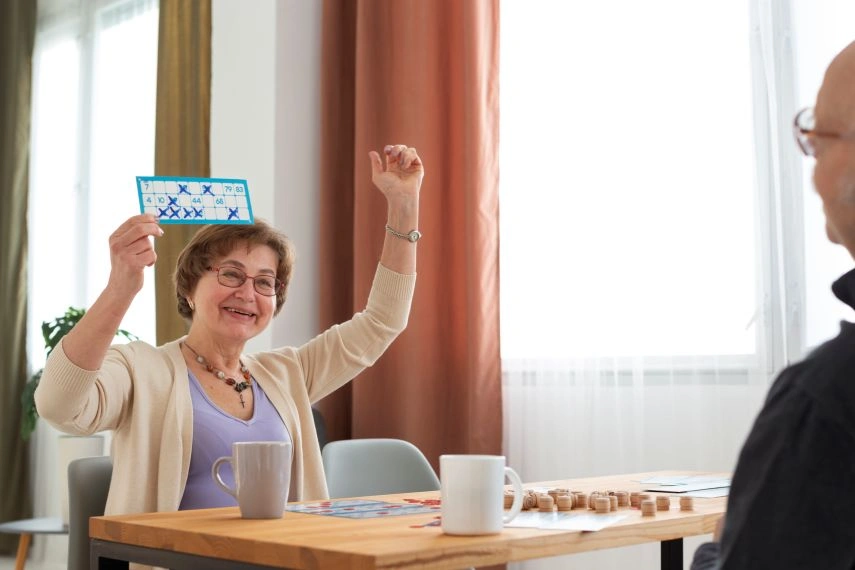
Brain exercises for seniors help keep their mind active and engaged. Moreover, they can improve their memory, focus, and thinking skills.Simple activities like yoga for seniors also support mental health and improve balance, making it easier to stay sharp and coordinated with growing age. As a result, keeping your mind active becomes necessary with age. In fact, it is as important as staying physically active. In fact, scientific evidence proves that brain training exercises for seniors are helpful. These exercises can slow mental decline and dementia, and keep their brains healthy.
Additionally, daily brain fitness exercises improve attention span and thinking skills. They also support better reasoning at any age. Furthermore, many seniors practice simple mental tasks every day. Thus, this routine improves emotional balance and builds self-confidence.
Why is Brain Health Important for Seniors?
Brain health is an important factor influencing a senior’s quality of life. Firstly, daily brain activities incorporate the use of memory, language, and decision-making. Thus, they allow a senior to continue living independently for as long as possible. Yet, a lack of mental challenges can contribute to a slowing of brain processing. So, cognitive challenges for seniors can enhance the clarity of their thinking. Additionally, these exercises support long-term brain health and mental function.
Research shows that brain-stimulating activities build and strengthen neural pathways. These pathways support better memory and thinking. Brain exercises can lower the risk of Alzheimer’s disease and also slow memory loss. Mental challenges help people with dementia stay mentally active. These activities support emotional strength and encourage daily participation.
How Brain Exercises Improve Cognitive Function
Brain training techniques activate several brain areas. These include memory, logic, and attention centers. Exercises for the brain and memory help the brain stay flexible.
Brain exercises for seniors support:
- Focus during daily tasks
- Better recall of names and events
- Faster problem solving
Mind exercises for seniors help with daily confidence. Brain training for memory loss also supports emotional well-being.
Best Brain Exercises for Seniors That Work Daily
Brain games for seniors help them think faster and remember more. Additionally, they provide fun, non-competitive ways to exercise the brain. For example, seniors can play simple brain games for this purpose. They help them remember and match numbers and improve other brain functions.
Memory Games for Seniors to Improve Recall
Moreover, memory games help seniors strengthen both short-term and long-term memory. There are several examples of memory games to improve memory. Some of these are picture matching and recalling details from a picture. These activities also support attention and focus, making daily tasks easier.
Jigsaw Puzzles for Elderly and Visual Thinking
Jigsaw puzzles improve seniors’ visual memory and spatial relationship skills. Besides, they activate both the left and right sides of the brain. As a result, a balanced brain supports clearer thinking.
Furthermore, jigsaw puzzles help seniors feel calm and relaxed. By using both sides of the brain, stress is reduced. Also, large-piece puzzles work best for seniors with vision limits. Hence, these puzzles support cognitive activity while keeping focus gentle and stress-free.
Logic Puzzles for Adults and Mental Strength
Logic puzzles provide strong mental stimulation. Moreover, they improve reasoning and strategic thinking skills. As a result, these puzzles for adults keep the mind sharp and active. Furthermore, regular practice supports mental acuity. Moreover, logic puzzles help lower the risk of dementia and Alzheimer’s disease.
Mind Games for Seniors and Emotional Balance
Mind games help seniors improve emotional regulation and concentration. Besides, these games can reduce anxiety and mental fatigue. But exercises work best when stress levels are low.
For example, word association and category naming are special types of mind exercises. Seniors can use them to train their memory. These activities involve both language skills and memory retrieval. As a result, they support cognitive function and mental sharpness.
Brain Training Exercise For Seniors At Home
Computer Games For Senior Citizens
Computer games for seniors stimulate memory and reaction time. Furthermore, many computer games offer adjustable difficulty levels. Thus, they support a memory training routine.
Moreover, digital brain games for seniors help improve attention span. For example, touch-screen games work well for seniors with arthritis. As a result, these games provide a safe and engaging way to keep the brain active.
Easy Brain Games For Seniors
Easy brain games promote daily problem-solving skills in seniors. For example, counting and color-matching are great examples of these games. Besides, simple tasks keep the brain active.
Furthermore, easy senior brain games help exercise memory systems. Also, the best results come from completing these games in short, regular sessions at home. As a result, seniors can maintain focus and improve cognitive function over time.
Brain Exercises for Seniors With Dementia
Cognitive exercises for dementia patients support routine thinking. They also reduce confusion by using familiar tasks. But to avoid frustration, dementia games for seniors should be simple. For example, cognitive stimulating activities for seniors with dementia include easy brain exercises. These include picture sorting, music recall, and other memory-based exercises. These activities also provide emotional comfort while keeping the mind active.
Brain Exercises to Prevent Alzheimer’s and Dementia
Cognitive stimulation exercises support memory and reasoning in Alzheimer’s patients. These activities focus on keeping the mind active. Most exercises for dementia patients improve attention and planning skills. Regular practice helps support daily thinking tasks.
Consistent mental exercises for dementia patients help seniors keep their brains healthy. Incorporating both physical activity and cognitive activity improves cognitive function of your brain.
Left Brain Workout and Analytical Thinking
Cognitive exercises designed for the left hemisphere (left brain) do an important task. They support one’s ability to solve problems with logic and math. Some examples would be tasks with counting and recognizing patterns.
Combining left brain exercises with cognitive activities for seniors improves brain structure. Regular activities support better planning skills and become easier to manage over time. Daily practice helps the mind stay focused.
Brain Fitness Exercises and Daily Routine
Cognitive exercises done on an ongoing basis enhance Cognitive Fitness. Short daily sessions of cognitive activity produce better outcomes than infrequent longer sessions. Cognitive Games for Seniors promote habit formation. Mental exertion combined with enough rest enhances cognitive abilities.
Continuous Support For Family Caregivers
Explore Your Options
How to Improve Cognitive Function With Simple Habits
Doing a mental task daily is the first step required to improve your cognitive ability. Cognitive exercises for seniors create the foundation for maintaining good long-term cognitive health. Cognitive exercises for seniors create the foundation for maintaining good long-term cognitive health.
Besides cognitive tasks, sleep, hydration, and mental tasks will improve your cognitive function. The best outcomes in cognitive training come through a well-balanced cognitive exercise program.
Brain Stimulating Activities for Seniors in Social Settings
Games for seniors support lifelong mental activity. They also create chances to connect with others. Playing games encourages conversation and social interaction. These moments support emotional well-being and mental health. Group games and creative arts are examples of social brain stimulation activities for seniors. These activities promote connection with others and enhance emotional health through social play.
Memory Aids in Daily Life
Using memory exercises aids recall and repetition. The act of naming objects and events aids in building strength within memory.
Using brain games for seniors promotes the continued use of aging minds. As a result, they each promote independence and confidence.
Methods to Promote Continued Use of Memory
Continued mental usage improves brain health for seniors over time. Several types of brain training methods improve mental health and prevent memory loss.
Moreover, daily routine of brain exercises improves mental function over time. These activities support emotional balance. They also help maintain independence. Regular practice benefits the mind throughout the aging years.
Conclusion
Seniors need to incorporate brain exercises into their daily routines. Regular brain fitness exercises support healthy cognitive function. They help reduce the risk of cognitive decline and memory loss. Keeping the brain active throughout the day improves long-term brain function. These activities support emotional balance. They also encourage independence during the aging process.
FAQs
What are the best brain exercises for seniors?
The best brain exercises for seniors include memory games, puzzles, and logic tasks. These activities support focus, recall, and mental speed.
Can brain exercises help prevent dementia?
Brain exercises to prevent dementia support neural connections. Regular mental activity supports long-term brain health.
Are brain games helpful for seniors with dementia?
Brain games for seniors with dementia support routine thinking. Simple games reduce confusion and stress.
How often should seniors do brain exercises?
Daily brain exercises for seniors show the best results. Short sessions support consistency and mental comfort.
Do computer games help senior brain health?
Computer games for senior citizens support reaction time and memory. Adjustable levels support comfort and confidence.
